Sofia Müller · 19 September 2026
Polish Dust-Proof Rover Wheel Designs Drive Shifts in Student Lunar Experiment Planning for South Pole Commercial Ventures
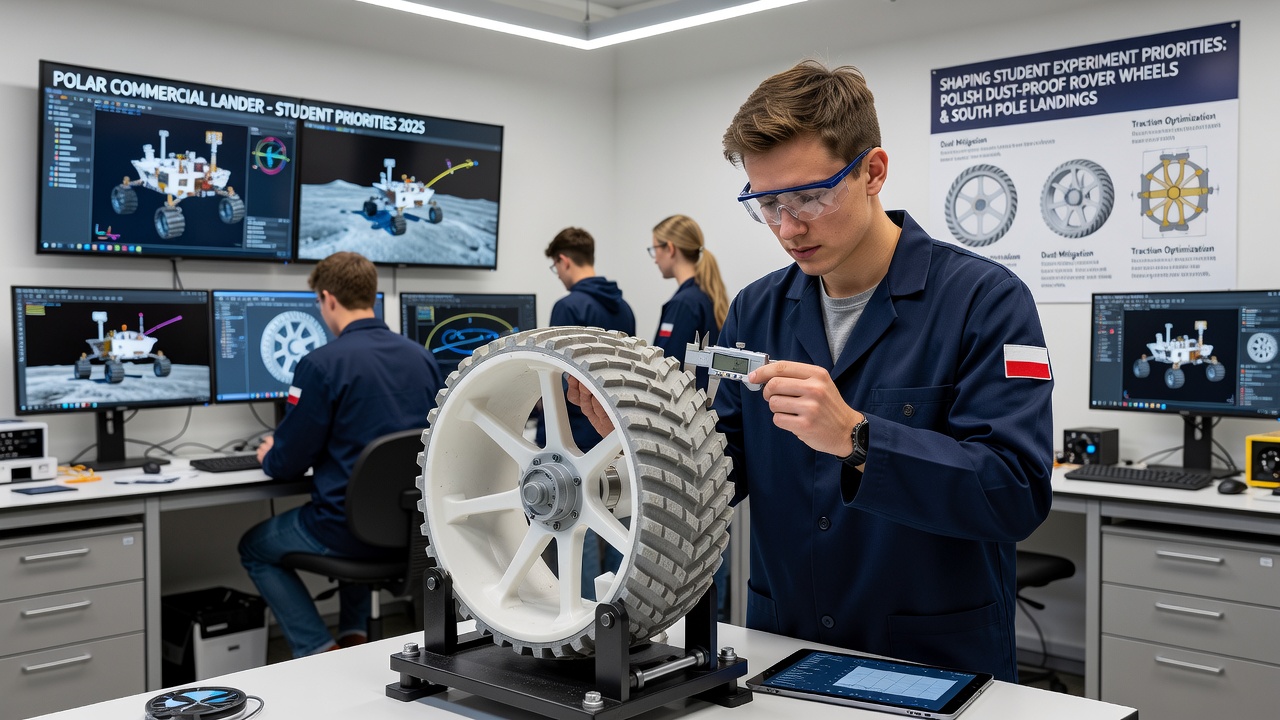
Polish engineering teams have developed rover wheels that incorporate layered filtration systems and specialized tread geometries to minimize lunar regolith adhesion, and these advancements are prompting university groups across multiple countries to adjust their experiment proposals for commercial missions targeting the lunar south pole, where data from European Space Agency reports indicate persistent challenges with abrasive particle accumulation on mobility components.
Researchers at institutions affiliated with lunarlab.edu.pl have documented how traditional wheel designs accumulate fine dust particles that reduce traction and increase mechanical wear, whereas the Polish prototypes employ electrostatic repulsion layers combined with sealed bearing housings that maintain functionality over extended traverses, and this performance data is circulating among student teams preparing payloads for landings scheduled through 2027.
Technical Features of the Wheel Systems
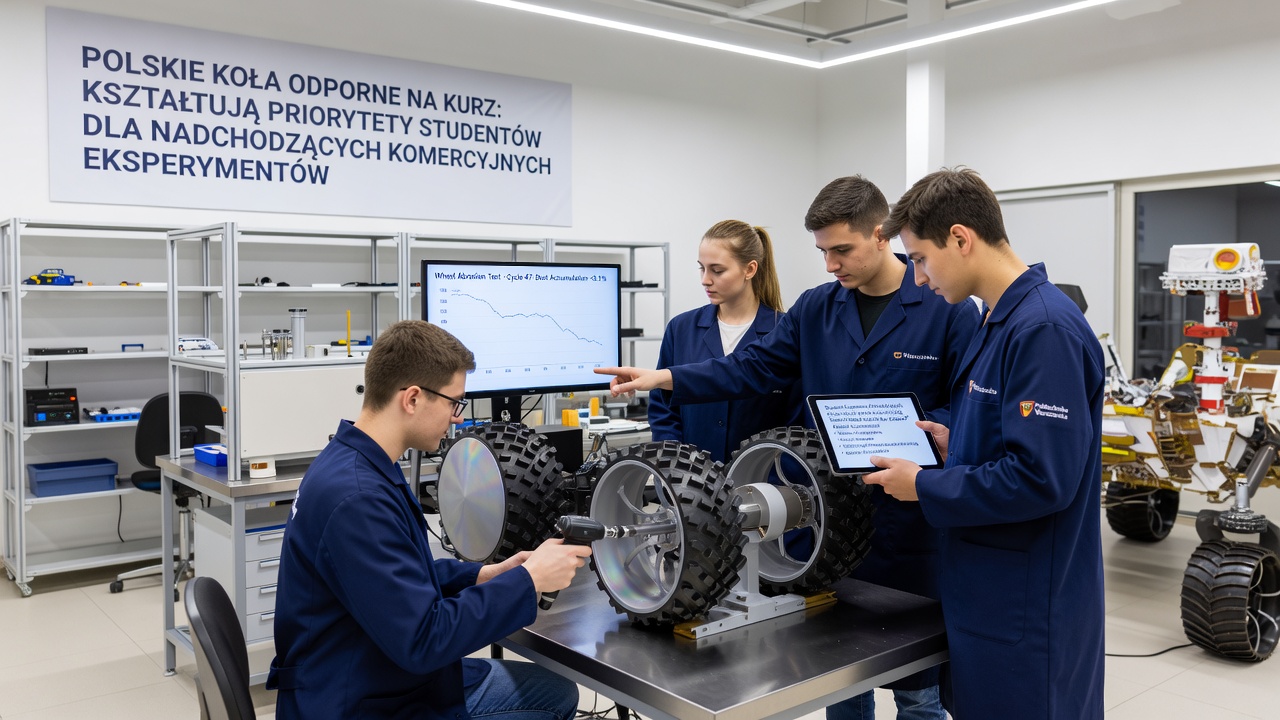
Design specifications released by Polish consortiums detail wheels constructed from titanium alloys with integrated micro-mesh barriers that filter particles smaller than 50 microns, while flexible spoke arrangements allow deformation without compromising seal integrity, and laboratory simulations conducted at facilities in Warsaw have shown these wheels retain over 90 percent of original torque output after 500 kilometers of simulated south pole terrain exposure.
Students analyzing these specifications note that reduced dust ingress translates directly to lower power consumption for mobility systems, which in turn opens opportunities for experiments requiring longer operational durations or heavier instrumentation packages, and several teams have revised their thermal management proposals to account for the wheels' ability to operate without frequent cleaning cycles.
Adjustments in Student Experiment Priorities
University programs in Poland, Germany, and Australia have begun prioritizing payload concepts that leverage extended rover endurance, such as spectrometers for mapping subsurface ice deposits or compact drills for sample acquisition at permanently shadowed craters, because the wheel technology minimizes downtime associated with dust-related maintenance, according to summaries from the NASA Artemis program coordination documents.
One case involves a student group at a technical university in Kraków that shifted from a short-range seismic monitoring device to a multi-kilometer traverse instrument suite after reviewing Polish wheel test results, while another team in Melbourne adjusted its regolith sintering experiment to include mobility-dependent deployment mechanisms that rely on consistent wheel performance over uneven slopes.
Connection to Commercial South Pole Landings
Commercial operators planning south pole deliveries have expressed interest in integrating Polish wheel variants into their rover platforms, and this interest aligns with timelines that include demonstration landings in September 2026, where mobility reliability will determine the success of resource prospecting activities near Shackleton crater, as outlined in industry coordination meetings attended by representatives from multiple launch providers.
Student experiment proposals submitted for these missions now frequently reference the wheel specifications as enabling factors for expanded science return, with emphasis on instruments that can collect continuous data streams rather than intermittent readings limited by mobility constraints, and funding agencies have begun requesting justification sections that address how proposed hardware interacts with advanced wheel systems to maximize mission utility.
Broader Implications for Lunar Research Programs
Academic observers tracking proposal trends report increased collaboration between Polish technical institutes and international student networks, resulting in joint projects that combine wheel technology with sensors developed elsewhere, and these partnerships have produced preliminary designs for dust-tolerant sample return containers that students intend to test during the 2026 demonstration window.
Data from early prototype deployments on terrestrial analog sites in Iceland and Antarctica further supports the wheels' suitability for polar-like environments, prompting revisions in curriculum modules at several aerospace engineering departments to include modules on regolith mitigation strategies derived from the Polish designs.
Conclusion
Polish dust-proof rover wheel developments continue to inform experiment selection processes for upcoming commercial south pole missions, with student teams incorporating mobility performance metrics into their planning documentation ahead of September 2026 activities, and ongoing test data dissemination suggests further refinements will shape subsequent proposal cycles as commercial operators finalize rover configurations for sustained polar operations.