Sofia Müller · 17 October 2026
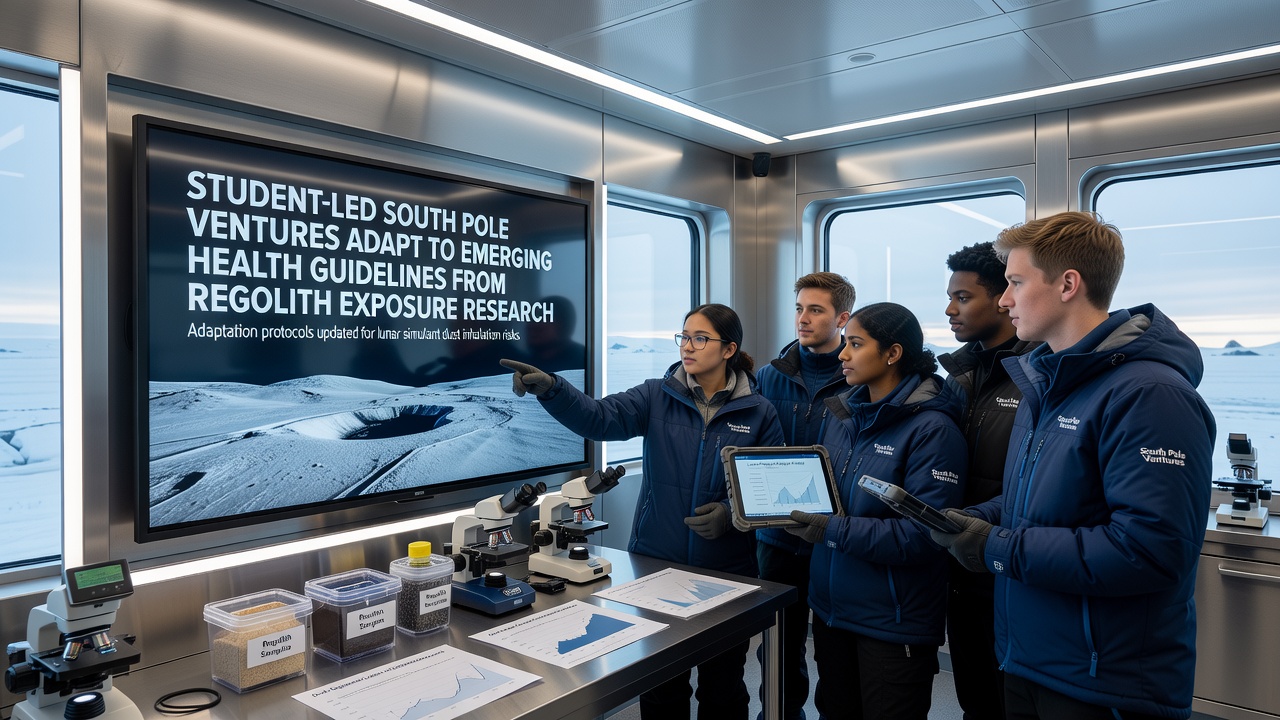
Student-Led South Pole Ventures Adapt to Emerging Health Guidelines from Regolith Exposure Research
Student teams operating commercial ventures at the lunar south pole have begun integrating new health protocols derived from recent regolith exposure studies, and these adjustments coincide with updated guidelines released in October 2026 by international space agencies. Researchers discovered that fine lunar dust particles can penetrate standard suits and habitats more readily than earlier models predicted, which prompted revisions to exposure limits and monitoring requirements for crews working in permanently shadowed regions.
Regolith Research Findings Shape Protocol Updates
Data collected from multiple Artemis-related sample analyses and ground-based simulation chambers revealed elevated risks of respiratory inflammation and skin irritation when exposure exceeds 0.5 milligrams per cubic meter over extended periods, according to reports from the European Space Agency. Student ventures that plan to deploy prospecting rovers and small-scale ice extraction units must now incorporate real-time dust sensors and revised decontamination procedures before operations commence. These changes affect everything from airlock design to crew rotation schedules, and teams have responded by redesigning filtration systems to meet the stricter thresholds.
One project at a Canadian university laboratory demonstrated that electrostatic repulsion layers added to rover wheels reduced dust adhesion by 37 percent during vacuum chamber tests, while similar modifications to habitat entry points showed comparable results. Observers note that such incremental engineering tweaks allow student-led groups to maintain their timelines even as regulatory expectations evolve.
Operational Adjustments Across Multiple Ventures
Ventures based at institutions in Australia and Japan have shifted their focus toward modular habitat sections that isolate high-dust work zones, and these designs integrate with the October 2026 exposure limits set by the Australian Space Agency in coordination with partner organizations. Crew members now follow a three-stage suit cleaning sequence that includes both mechanical brushing and low-pressure gas jets before re-entering living quarters, a process validated through repeated trials at analog facilities in the Atacama Desert.
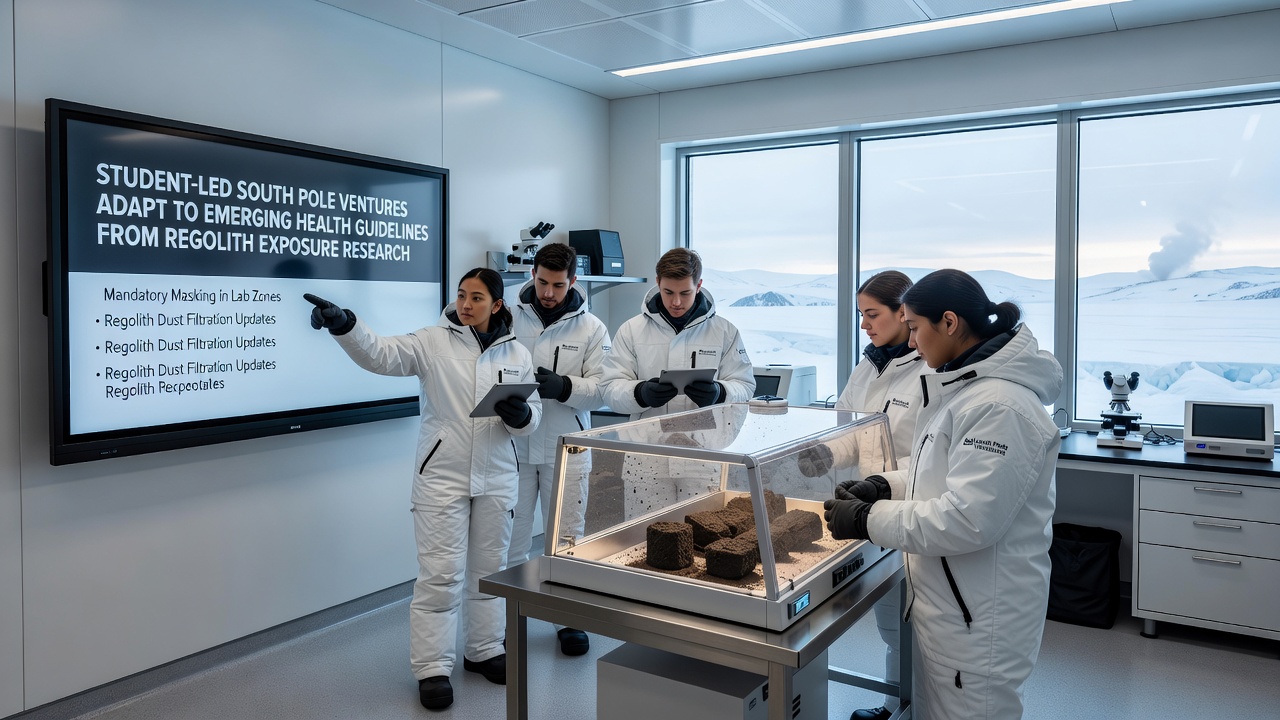
Teams have also adopted wearable exposure monitors that log cumulative particle intake and transmit alerts when thresholds approach the revised daily maximum, and this technology draws directly from health monitoring frameworks developed by the Canadian Space Agency. Because many student ventures operate with limited budgets, they rely on open-source sensor designs shared through academic networks rather than proprietary hardware, which keeps costs manageable while still satisfying compliance checks.
Training and Monitoring Programs Expand
Educational programs attached to these ventures now include dedicated modules on regolith toxicology and mitigation strategies, with instructors drawing from peer-reviewed papers published in the Journal of Aerospace Medicine and Biology. Participants practice emergency response drills that simulate rapid habitat pressurization changes triggered by dust breach alarms, and they review case studies from earlier robotic missions that encountered unexpected particle accumulation. Such preparation helps ensure that student crews can adapt quickly when guidelines receive further refinements based on ongoing sample analysis.
International collaboration has accelerated the sharing of best practices, and representatives from multiple continents participate in monthly virtual reviews organized by university consortia. These sessions allow teams to compare exposure data from different regolith simulants and to identify which filtration materials perform most consistently across temperature extremes found at the lunar poles.
Conclusion
Student-led south pole ventures continue to refine their operations in response to health guidelines informed by regolith exposure research, and the October 2026 updates have prompted concrete changes in equipment, training, and monitoring practices. Continued data collection from both orbital and surface assets will likely drive additional adjustments, yet the current adaptations demonstrate that academic groups can align their commercial objectives with evolving safety standards through targeted engineering and cross-institutional cooperation.